
How Long Can You Wear Your Contact Lenses For?
By Julie Sennett
·4 min read
Since I get this question a lot, in this post I will provide some advice on how long you should be wearing your contact lenses. The answer to this question of course depends on a lot of things, but assuming that you wear daily wear contact lenses (i.e., not contact lenses that you sleep with), and that you have generally healthy eyes (i.e., don't suffer from severe dry eye, allergic conjunctivitis, blepharitis, SPK, GPC, etc.), then this will serve as a good general guideline.
Medical disclaimer: I am not a doctor and this article is not a substitute for professional medical advice. You are not being prescribed contact lenses on this page. Please read Contacts Advice Terms of Use before continuing.
Why should you limit your wearing time?
Contact lenses are not a natural part of the eye! They are an extra layer of plastic covering the cornea which can lead to several changes over time. The main change that contact lenses induce while you're wearing them is that less oxygen reaches the surface of your eye. This is called hypoxia.
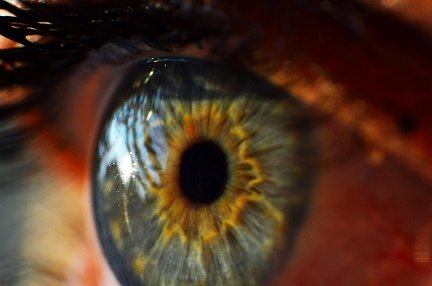
Corneal Physiology 101
Here's a little physiology background about your cornea. Your cornea is a clear, transparent living tissue, and like every other living tissue in your body, it requires oxygen to function properly. In most body parts oxygen is delivered to our organs via blood. Veins and arteries carry blood (which carries oxygen) from our heart and lungs to every organ in our body and then back again. The cornea (the part of the eye that is covered by your contact lens) however, is an exception. The cornea does not receive oxygen from blood. It cannot because there are no blood vessels within it. Our vision would not be very clear if our corneas had veins and arteries running through them. Rather, the cornea gets its oxygen directly from the air by a process called diffusion.
The effect of contact lenses on oxygen transmission to the cornea
You guessed it. Since the cornea gets its oxygen from the air, and contact lenses cover the cornea, contact lenses reduce the amount of oxygen reaching the cornea! That's why you should limit the number of hours you wear contact lenses throughout the day. There is another activity that we all do which induces corneal hypoxia. And that activity is sleeping. Yes, when we sleep our eyes are closed. If the eyes are closed the corneas are not exposed to the oxygen in the air. Night time hypoxia is natural for the cornea and does not lead to harm, but if you have a full day's worth of contact lens wear, then go right to sleep, your eyes are never receiving the proper amount of oxygen. Over time this will lead to complications.
Not all contact lenses allow the same amount of oxygen through them
Contact lenses don't completely block all of the oxygen from passing through them. They let some oxygen through, but some brands are much better at this than others. Brands that use the materials called silicone hydrogel, as opposed to conventional hydrogel, allow MUCH more oxygen to reach your eye. That's why these are generally better for you. Luckily, all new monthly and bi-weekly lenses, and certain daily lenses are now made with silicone hydrogel. But even silicone hydrogel lenses have limitations and shouldn't be worn all day long.
Brands that utilize silicone hydrogel:
- Acuvue Oasys, Acuvue Oasys for Astigmatism, Acuvue Oasys for Presbyopia
- Acuvue TruEye
- Air Optix, Air Optix for Astigmatism, Air Optix Color, Air Optix Multifocal
- Dailies TOTAL1
- Biofinity, Biofinity Toric, Biofinity Multifocal
- PureVision2, PureVision2 Toric for Astigmatism, PureVision2 Multifocal
So how long should I be wearing them?
In general, it is recommended to limit wear to 12 hours or less per day, and 6 days or less per week. Wearing a silicone hydrogel lens or a daily wear lens helps to prevent complications for people who need to wear their contact lenses for long hours.
Remember that if you begin to have discomfort at any time with the contact lenses you should consider removing them. If the discomfort is consistent, consider reducing your wearing time, or upgrading to a high quality lens. There are specific eye drops available that can prolong the comfort throughout the day if necessary. And don't be afraid to see your optometrist for any contact lens related problems.
I hope you found this information helpful! For a full description of different contact lens brands and prices, visit the price comparison page.
Looking for the lowest price on contact lenses?
Compare prices across 8 major retailers in seconds — always free, no account needed.
Compare Contact Lens Prices →